



Peerless
“This plain, smooth pattern of radiator is well suited to Nursery, Dining Room, Kitchen or the like, where the surface may be washed as frequently as is the woodwork, floors or windows” – Radiation and Decoration (1905)
Showing all 3 results
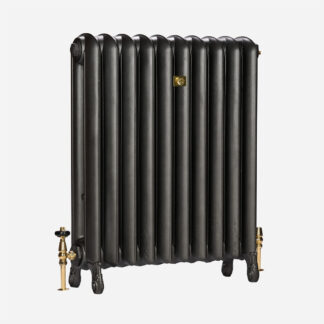
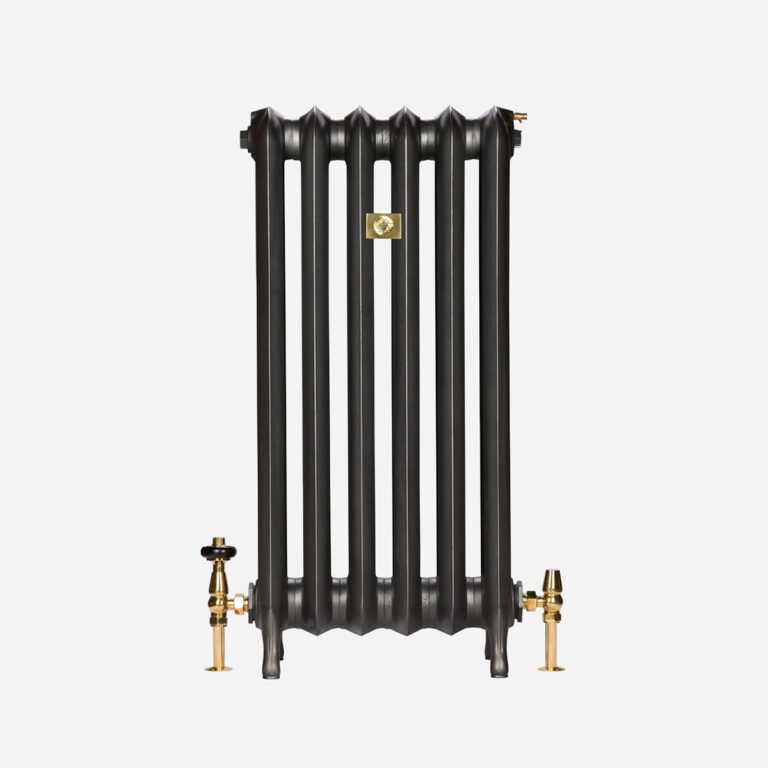
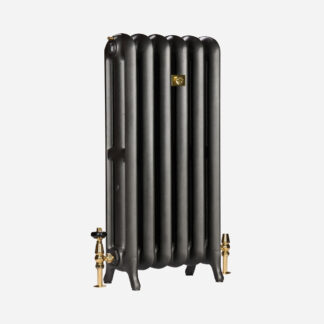
Showing all 3 results
The Evolution of the Peerless
Peerless: The Original School Radiator
In Britain, the term “school radiator” brings back memories of childhood, with many recalling the warmth—and occasional burns—from oversized radiators from their school days. The origins of this iconic design trace back to the American Radiator Company’s (ARCo) Peerless, likely introduced in 1892, the year ARCo was founded.
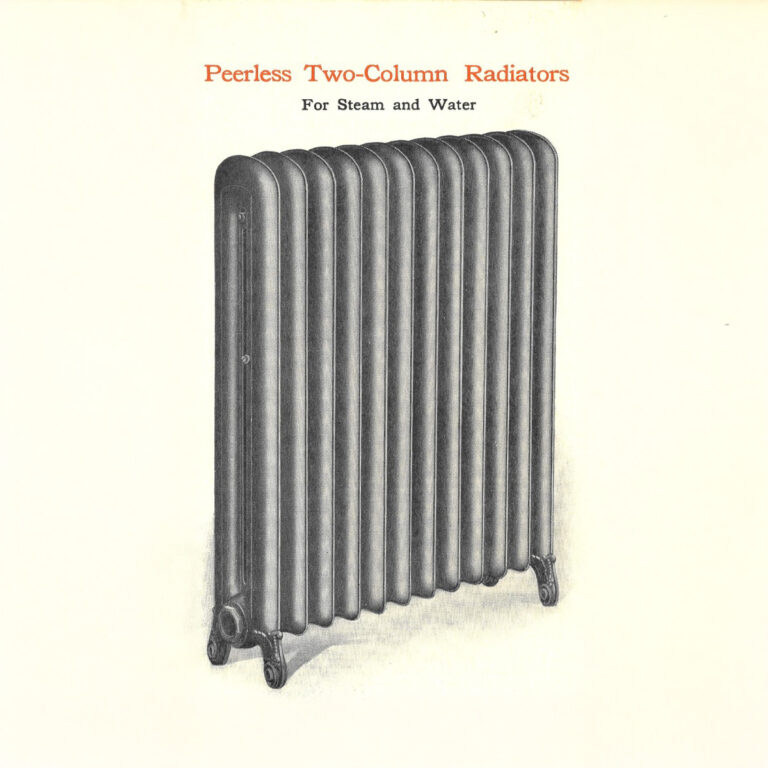
The Peerless radiator (pictured left) was the blueprint from which all future school radiators evolved. Despite the manufacturer gaining fame during the American Gilded Age, where ornate and decorative designs were the most common, the Peerless stood apart with its clean, smooth, and simple aesthetic. Remarkably, in its early years, the Peerless was the only non-ornate radiator in ARCo’s lineup.
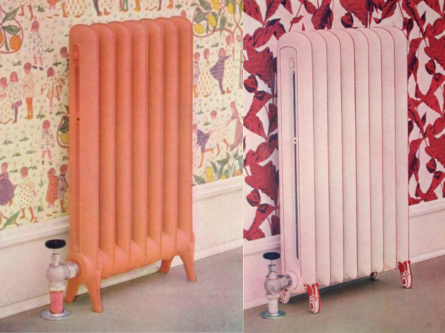
1897
In ARCo’s 1897 radiator manual, The Ideal Fitter, the Peerless appeared in just one version: a simple two-column radiator designed for both steam and hot water systems. Amongst a range of highly ornate radiators—ARCo featured numerous decorative models in this manual—the Peerless stood out for its clean, minimalist design.
As noted in ARCo’s publication Radiation and Decoration, the Peerless was “particularly well adapted to a nursery. It is so clean and cleanable,” making it ideal for public buildings where hygiene and ease of cleaning were essential. This emphasis on practicality over ornamentation set the Peerless apart from its contemporaries.

1905
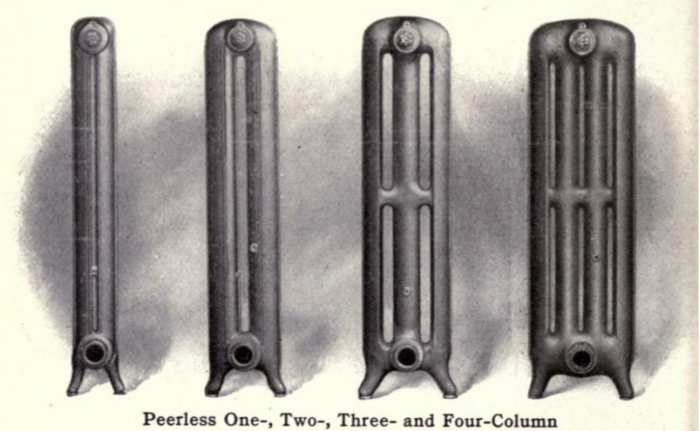
By 1905, the Peerless range had expanded to include single, two, three, and four-column versions. Its rising popularity saw many of ARCo’s more ornate designs phased out.
Interestingly, the original two-column model retained its decorative legs, while the newer models adopted a more streamlined look, reflecting a shift towards simpler design. The four-column version introduced a unique feature: dimpled columns with a raised, pinched line running along the exterior, adding texture and dimension, while the other versions remained smooth and flat.

1910
By 1910, the Peerless design had undergone further refinement. The decorative legs of the two-column version were simplified to match the smooth, flat legs of the other models, and the distinctive raised pinched rim on the four-column version was removed, creating a uniform look across the range.
This transformation marked a broader trend away from ornate radiators. To illustrate this, ARCo’s 1910 catalog featured just five ornate models, compared to 15 in 1905. As tastes shifted, even the Peerless, initially noted for its simplicity, adopted an even more streamlined appearance.
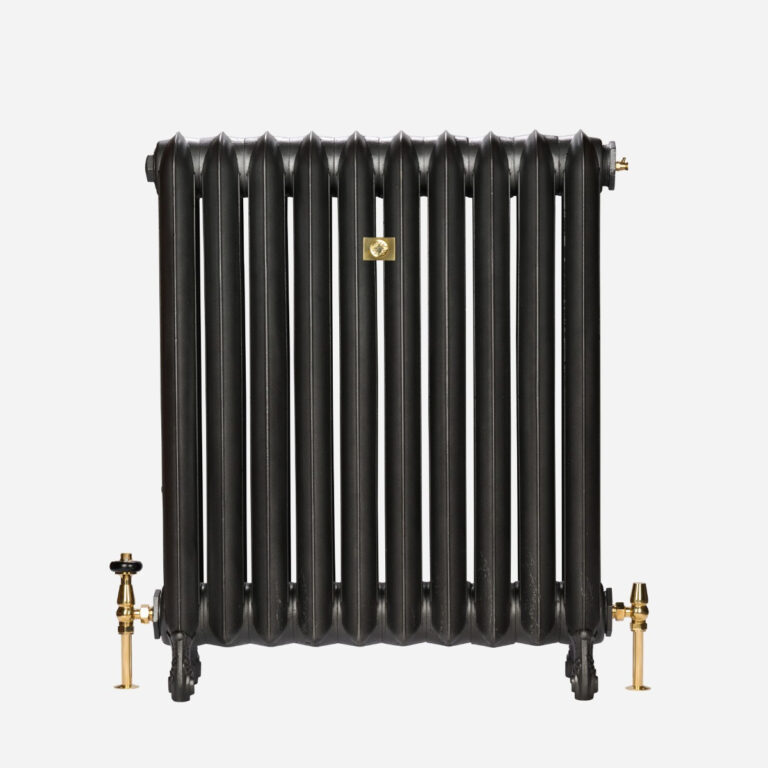
If you’re drawn to this classic design but find it unavailable, consider the Emmeline radiator by Castrads—a modern reimagining of this Victorian classic, crafted in the UK.